Three days later, Faron came to the diner.
I was preparing a pot of chicken soup when the bell above the front door rang.
I looked up.
He was standing there in his old fishing jacket.
His face looked tired.
He came to the counter.
“Can we talk?”
“I’m working.”
“It’ll only take a minute.”
I put down the ladle.
“What do you want?”
He glanced toward the dining area.
“Not here.”
I wiped my hands and stepped toward the side entrance.
Peg saw me leaving.
She gave me a look that said she was ready to come running if I needed her.
Outside, Faron leaned against his truck.
“Angela, this has gone far enough.”
I folded my arms.
“Then stop coming here.”
He rubbed his forehead.
“I’ve been having a difficult time.”
I said nothing.
“The boat deal fell through. My friends are asking questions. My mother is upset. Everything is a mess.”
I looked at him.
“That’s unfortunate.”
He shook his head.
“You used to care when I had problems.”
“I used to solve your problems.”
“What’s the difference?”
I looked directly at him.
“The difference is that I don’t have to solve them anymore.”
He stared at the ground.
Then he said:
“I need you to reopen one card.”
I almost laughed.
“Didn’t you hear me the first time?”
“Just one. I have bills coming up.”
“Get a job.”
“I have a job.”
“Then use your paycheck.”
He looked angry.
“You know the body shop situation isn’t simple.”
“Faron, your business closed in 2015. It’s been eleven years.”
He didn’t answer.
Then he lowered his voice.
“Look, I know I made mistakes. But you have to understand that my mother depends on me.”
I looked at him for a moment.
“Then take care of your mother.”
He frowned.
“What?”
“She’s your mother, Faron. Not mine to finance.”
He stepped closer.
“You sound like a stranger.”
I nodded.
“That’s probably because you haven’t listened to me in years.”
He opened his mouth, but before he could speak, my phone rang.
It was my lawyer.
I answered.
“Hello?”
“Angela, I have an update. Can you come to my office tomorrow morning? The bank has sent over some preliminary information, and there’s something we need to discuss.”
I looked at Faron.
His expression changed.
He had heard enough to know the call was important.
“Is this about the cards?” he asked after I hung up.
“That’s between me and my lawyer.”
He stared at me.
Then he said something that confirmed what I had been thinking.
“Angela, whatever you found, don’t make it bigger than it needs to be.”
I felt a chill move through me.
I hadn’t told him what the bank had discovered.
Yet he was already asking me not to make it bigger.
I turned toward the diner.
“Goodbye, Faron.”
He called after me.
“Angela!”
I didn’t turn around.
The next morning, I sat in my lawyer’s office with all three folders on his desk.
He had received additional information from the bank.
“Angela, the bank is still investigating the transactions. But there’s something important here.”
He opened a document.
“Several purchases were made by authorized users. That means the fact that you didn’t personally make the purchases doesn’t automatically establish fraud. The bank will need to determine the authorization, the applicable account terms, and whether any charges exceeded the permission you gave.”
I nodded.
“I understand.”
He continued.
“But this vehicle financing payment is different enough that we need to examine it carefully. Have you ever signed paperwork for a vehicle loan?”
“No.”
“Have you ever agreed to be a guarantor for Faron?”
I shook my head.
“Never.”
He made a note.
“Then we’ll request the financing documents and the account records through the proper channels.”
I felt my stomach tighten.
“What if he used my information?”
“Then we address it based on the evidence. Don’t contact the financing company pretending to be someone else. Let us handle the requests properly.”
I nodded.
Then he showed me another document.
It was a copy of a financial statement associated with the financing agreement.
My name appeared in the section marked PAYMENT SOURCE.
But I was not listed as the borrower.
Faron was.
I stared at the page.
“So he used my card to pay his vehicle loan?”
“That’s what the current records suggest.”
I leaned back.
For eleven years, I had thought I was helping a man rebuild his life.
Instead, I had become the financial support system for someone who never seemed to intend to stand on his own.
My lawyer closed the folder.
“Angela, I also want to remind you that your divorce is final. You don’t have to negotiate new financial arrangements with him. Keep your boundaries.”
I thanked him.
When I left his office, the sky was gray.
But I felt strangely lighter.
For the first time, I had people helping me protect what belonged to me.
Two weeks passed.
The bank continued its investigation.
The financing company provided additional documentation through the appropriate process.
My lawyer reviewed everything.
The vehicle payment was connected to Faron’s truck financing.
The bank could not automatically reverse every charge simply because I hadn’t personally made it. However, it agreed to investigate the disputed transaction and review whether the payment had been properly authorized under the account agreement.
The other charges were being reviewed separately.
Some were ordinary purchases that Faron and Earline had been permitted to make while they were authorized users.
Others required more explanation.
I learned an important lesson during those weeks.
Being legally responsible for an account and being treated fairly by the people using it were two completely different things.
I had confused them for years.
Meanwhile, life at the diner continued.
The morning coffee still tasted the same.
The fryer still needed cleaning.
Customers still complained when the breakfast potatoes were too crispy.
And every Friday, I made my mother’s pierogies.
Only now, when I went home, there was no one waiting to ask me whether I had enough money for his weekend plans.
I started putting a little money aside.
Twenty dollars one week.
Fifty the next.
Sometimes only ten.
It wasn’t much, but it belonged to me.
I also bought myself a new winter coat.
A good one.
Not the cheapest one on the rack.
Not one I had to justify to anybody.
I bought the coat because I needed it.
That was enough.
Then came the Sunday afternoon I had been dreading.
Earline called.
I almost didn’t answer, but I decided I was tired of avoiding the phone.
“Hello?”
“Angela, we need to talk.”
“About what?”
“Faron.”
I sighed.
“What’s happened now?”
“He has been having a terrible time.”
I didn’t answer.
“He lost the boat deal. His truck payment is behind. His friends are laughing at him.”
I looked out the kitchen window.
“That sounds difficult.”
“Don’t speak like that. You know he isn’t good with money.”
“He’s fifty-something years old, Earline.”
There was a pause.
Then she said:
“I never thought you’d become so cold.”
I leaned against the counter.
“Cold?”
“After everything we’ve been through together.”
I almost asked her what she meant by everything.
The hair appointments?
The jewelry?
The casino trips?
The grocery bills?
The eleven years of statements?
But I didn’t.
I simply asked:
“Earline, do you remember the day outside the courthouse?”
She went quiet.
“You laughed and told Faron I would still pay for your hair.”
“That was a joke.”
“It wasn’t funny to me.”
“Oh, Angela. Don’t be dramatic.”
I closed my eyes.
“I paid for your hair every Friday for years. I bought you things you never asked me to buy. I helped when your son lost his business. I did all of it because I thought we were family.”
“We were family.”
“No. I was the person paying.”
She gasped.
I continued.
“And the saddest part is that I don’t think either of you ever noticed when I couldn’t afford something for myself.”
She was silent.
Then, in a smaller voice, she said:
“I suppose you want an apology.”
I thought about it.
Maybe eleven years ago, I would have begged for one.
Maybe I would have been satisfied with a few kind words.
But now?
Now I wanted something much simpler.
I wanted peace.
“I don’t need an apology, Earline. I need you to stop calling me for money.”
She began crying.
I couldn’t tell whether the tears were real.
Perhaps they were.
Perhaps she was genuinely frightened about losing the help she had depended on.
But her fear didn’t create an obligation for me.
“Goodbye, Earline.”
I ended the call.
Then I blocked the number.
It was the first time I had ever done that.
And I slept better that night.
A month later, Peg approached me during our afternoon break.
“Angela, I have an idea.”
I looked up from my sandwich.
“What?”
“Remember how you always talk about opening a little place of your own someday?”
I laughed.
“That was twenty years ago.”
“So?”
“So I’m not twenty anymore.”
Peg shook her head.
“Neither am I. But I still know a good cook when I see one.”
She explained that the diner had been doing well, and she wanted to expand the food stand business at the county events.
She needed someone she trusted to help manage it.
She wanted me to take charge of the pierogi operation.
At first, I thought she was joking.
“Peg, I already work here.”
“I know. I’m talking about something bigger. You would get a percentage of the profits, and we’d put everything in writing.”
I looked at her.
“Why me?”
She gave me a funny look.
“Because your pierogies are the reason people stand in line for twenty minutes.”
I laughed.
But she was serious.
We talked for another hour.
By the end of the week, we had an agreement.
It wasn’t a restaurant.
It wasn’t a fortune.
But it was something I could build with my own hands.
And for the first time in years, I had something to look forward to.
The following month, I received another call from my lawyer.
The bank had completed part of its review.
Some of the disputed transactions remained under investigation, while others were determined to have been valid purchases made by authorized users under the account terms.
The financing company had confirmed that the $8,750 payment had gone toward Faron’s vehicle loan.
There was no evidence in the documents reviewed that I had personally signed the vehicle financing agreement.
My lawyer explained that the payment dispute would be handled according to the bank’s findings and that I should keep all the records.
I asked whether Faron could force me to reopen the cards.
He answered immediately.
“No. Those are your accounts. You are not required to give him or his mother access to your credit.”
I thanked him.
Then I asked one final question.
“Can I finally stop worrying about them?”
He smiled.
“Legally, I think you’ve done what you need to do. Emotionally, that part takes longer.”
He was right.
But it was getting easier.
On a Saturday morning in early December, I was working the diner counter when the door opened.
Faron walked in.
I hadn’t seen him in weeks.
He looked thinner.
His jacket was worn, and his hair needed cutting.
He sat at the counter.
I placed a menu in front of him.
“What can I get you?”
He looked at me.
“Coffee.”
“Anything to eat?”
“Just coffee.”
I poured it.
For a few minutes, neither of us spoke.
Then he said:
“I heard you’re doing the food stand business with Peg.”
“Yes.”
“Good for you.”
“Thank you.”
He stirred his coffee.
Then he said:
“Mom isn’t doing very well.”
I waited.
“She had to cancel her hair appointments. She’s been complaining about it.”
I nodded.
“I’m sorry to hear that.”
He looked at me.
“That’s all you have to say?”
“Faron, what do you want me to say?”
He rubbed his face.
“Nothing. I guess.”
He drank his coffee.
Then he looked toward the window.
“You know, I never thought you’d actually close those cards.”
I leaned against the counter.
“Why not?”
“Because you always took care of things.”
I thought about that.
Then I answered.
“I did.”
He nodded slowly.
For the first time, he didn’t argue.
“I guess I got used to it.”
I looked at him.
“Yes. You did.”
He put his cup down.
“Do you ever think about when we were young?”
I did.
I remembered the old truck.
The coconut cream pie.
The radio.
The nights when we had almost nothing but somehow felt rich.
But I also remembered everything that came afterward.
“I remember,” I said.
He looked hopeful.
“Sometimes I wish we could go back.”
I shook my head gently.
“We can’t go back, Faron.”
He lowered his eyes.
“Maybe I should have treated you better.”
I didn’t answer immediately.
Because there was a time when those words would have meant everything to me.
But now they arrived too late.
I looked at him and said:
“You didn’t lose me the day the judge signed those papers. You lost me little by little, every time you made me feel like my only value was what I could pay for.”
His eyes became wet.
I continued.
“I hope you figure things out. I really do. But I can’t be the person who fixes everything anymore.”
He nodded.
Then he left a five-dollar bill on the counter for his coffee.
I watched him walk toward the door.
He turned once.
“Take care of yourself, Ange.”
I nodded.
“You too.”
The bell rang as he left.
And that was the last time I saw him.
Spring arrived.
The diner was busy, and the pierogi stand had become more successful than Peg and I expected.
We started taking orders for local events.
People came from neighboring towns.
Some drove thirty minutes just to buy a dozen of my mother’s potato-and-cheese pierogies.
Peg eventually convinced me to put a little sign above the counter.
ANGELA’S HOMEMADE PIEROGIES — FAMILY RECIPE SINCE 1984.
I cried when I saw it.
Not because I was sad.
Because my mother would have loved it.
I also made a decision about my money.
I opened a separate savings account.
Every week, I deposited something.
Sometimes fifty dollars.
Sometimes two hundred.
I stopped buying things for people who never appreciated them.
I started fixing things around my house.
First the roof.
Then the refrigerator.
Then the old back steps.
I even booked a short trip to visit a friend I hadn’t seen in years.
When I told Peg, she smiled.
“About time you did something for yourself.”
I laughed.
“Apparently, I’m learning.”
One evening, I sat at my kitchen table with my mother’s old recipe box.
The cards were soft around the edges.
Some had flour stains.
Others had little notes written in her handwriting.
I pulled out the pierogi recipe.
At the bottom, she had written something I had never paid much attention to.
Make enough to share, but never forget to save some for yourself.
I read it twice.
Then I smiled.
Maybe my mother had understood something I had spent eleven years learning.
There was nothing wrong with being generous.
There was nothing wrong with helping family.
There was nothing wrong with loving someone enough to share what you had.
But love was not supposed to require you to disappear.
And generosity was not supposed to become a permanent bill.
One Friday afternoon, I was closing the register when my phone received a message from an unfamiliar number.
I opened it.
It was from Earline.
She had written:
Angela, I know we haven’t spoken in a long time. I wanted to ask if you could help me with my hair appointment this week. Things have been difficult. I hope you don’t hate me.
I stared at the message.
For a moment, I remembered that woman standing outside the courthouse in her fresh perm.
I remembered her laughing.
She’ll still pay for my hair.
I remembered the first time she asked me for help.
And I remembered the last time she told me I was making a mistake.
I didn’t feel angry anymore.
I didn’t feel the need to punish her.
I simply didn’t want to return to that life.
So I typed one sentence.
Earline, I don’t hate you. But I am no longer responsible for paying your bills. I hope you understand.
I sent it.
Then I blocked the number again.
I put my phone away and finished counting the register.
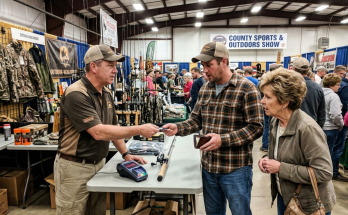
A few months later, I was standing behind the pierogi counter at the county sports show again.
The same fairgrounds.
The same boat tents.
The same smell of fried food and coffee.
I was wearing my new winter coat, even though it wasn’t particularly cold.
Peg was beside me, arguing with a supplier about the price of potatoes.
A young woman approached the counter.
“Excuse me,” she said. “Are these homemade?”
I smiled.
“Every single one.”
“How much for a dozen?”
“Twelve dollars.”
She ordered two dozen.
As I packed them, she noticed the little recipe box sitting on the shelf behind me.
“Is that an antique?”
I smiled.
“No. It’s my mother’s.”
“That’s sweet.”
I looked at the box.
“She taught me how to make these.”
The woman smiled.
“My mother taught me how to make bread. I wish I’d written down more of her recipes.”
I nodded.
“That’s why I keep this close.”
After she left, Peg handed me a cup of coffee.
“You know something, Angela?”
“What?”
“You look different.”
I laughed.
“Older?”
“No. Happier.”
I looked around the fairgrounds.
Then I looked at the money in my cash box.
For years, I had watched other people enjoy the things my paycheck bought.
Now I was standing behind something I had built myself.
And it felt wonderful.
That evening, after the fairgrounds began emptying, I sat in my car for a few minutes before driving home.
I thought about the courthouse steps.
The laughter.
The declined card.
The bank letters.
The arguments.
The long nights when I wondered whether I had been wrong to close the accounts.
I thought about the $96,417.
I couldn’t get those years back.
I couldn’t get the money back all at once.
And I couldn’t change the fact that I had allowed people to take advantage of my kindness for far too long.
But I could decide what happened next.
I started the engine.
Then I remembered something.
That first Friday after the divorce, I had gone home and cut my own copies of the cards in half with kitchen scissors.
I had thought I was just ending a financial arrangement.
I hadn’t realized I was beginning something else.
I was beginning a life where I didn’t have to ask permission to spend my own money.
A life where I could buy a new coat without feeling guilty.
A life where I could save for retirement without wondering whether someone else’s gas tank was empty.
A life where I could sit at my kitchen table, eat a piece of coconut cream pie, and enjoy the quiet.
When I got home, I made myself a cup of tea.
I took out my mother’s recipe box and placed it on the table.
Then I opened my banking app.
My savings account had grown.
Not enough to retire tomorrow.
Not enough to forget eleven difficult years.
But enough to make me smile.
I put my phone down.
Outside, the evening was quiet.
And for once, nobody was calling to ask me for anything.
I thought about what Earline had said outside the courthouse.
“Don’t worry, she’ll still pay for my hair.”
I remembered my answer.
“Of course.”
Back then, they thought I was agreeing to continue being their personal bank.
But I had been saying goodbye.
They just hadn’t understood it yet.
I spent eleven years paying for two people who never learned to stand on their own. It took one declined card to remind me that I had spent far too long standing alone.
And if there’s one thing I learned, it’s this:
Being kind doesn’t mean allowing people to use you. Being family doesn’t mean having unlimited access to someone’s paycheck. And loving someone should never require you to abandon yourself.
I lost eleven years and nearly a hundred thousand dollars.
But I got something back that was worth more than either.
My peace.
And this time, I wasn’t going to let anybody charge it to my account.

One Comment on “My Husband and His Mother Used My”